Bulk Messaging for Ecommerce Stores: What Actually Works
Your last bulk send got opened by a fraction of your list, and you are not sure why. Cart recovery, order updates, and post-purchase follow-ups all depend on messages that actually land, and most stores send them into a void. This breakdown of Whatsapp Business API covers the trade-offs in more depth.
This article breaks down which campaign types convert, how WhatsApp, Instagram DM, and Messenger compare for ecommerce, and how to segment lists without getting blocked. You will also see how a unified platform like Com.bot fits into a bulk messaging strategy and how to measure ROI.
Why Bulk Messaging Still Drives Ecommerce Revenue
Bulk messaging remains a revenue powerhouse for ecommerce because it reaches customers on the channels they already use daily, driving repeat purchases and higher lifetime value. A shopper who ignores a promotional email may still read a text within minutes. That gap in attention explains why stores keep expanding beyond email blasts into SMS, WhatsApp, and other mobile channels.
The numbers tell a clear story. SMS open rates average around 98 percent, compared with roughly 20 percent for email. WhatsApp messages show a similar 98 percent open rate. No inbox filter buries a text message the way it buries a promotional email, so the odds of a customer actually seeing your offer rise sharply.
This does not mean bulk messaging is a license to blast strangers. Consent separates a welcome offer from spam. A customer who opted in expects order confirmations, shipping updates, back-in-stock alerts, and the occasional price drop alert. Send those, and the channel feels like a service. Send unsolicited pitches, and you burn trust fast.
Three pillars hold the whole system together: opt-in rules, deliverability, and metrics. Opt-in rules define who you may contact and how. Deliverability determines whether your messages actually arrive. Metrics reveal whether anyone is reading, clicking, and buying. Get all three right, and bulk messaging becomes a repeatable revenue engine rather than a one-off experiment.
Consider how these channels work together. A cart abandonment text can recover a sale that an email missed. A win-back campaign on WhatsApp can revive a dormant buyer. Push notifications can nudge loyalty members toward a new drop. Each channel plays a distinct role, and the strongest ecommerce stores coordinate them instead of treating any one as a silver bullet.
Opt-In Rules, Deliverability, and the Metrics That Matter
Getting bulk messaging right starts with explicit opt-in consent, maintaining sender reputation, and tracking the metrics that reveal campaign health. Skip any one of these, and even a well-written message can land in a spam folder or trigger a compliance complaint.
Each channel has its own rules. SMS falls under TCPA compliance, which generally requires express written consent before you send promotional texts. Email operates under CAN-SPAM in the United States and GDPR in Europe, both of which demand clear unsubscribe options and honest sender information. WhatsApp Business API access typically requires opt-in collected through your website, app, or an existing customer relationship.
Deliverability depends on sender reputation. A short code, long code, or alphanumeric sender ID all carry different trust profiles with carriers. High complaint rates, outdated numbers, and spam traps drag that reputation down. Clean your lists regularly by removing hard bounces, inactive numbers, and contacts who never engaged.
Carrier filtering and message throughput also shape results. Sending too fast through a low-trust number can trigger throttling. Warm up new numbers gradually and segment your audience so each promotional campaign goes to people who opted in and expect to hear from you.
Then watch the metrics that matter. Open rate should clear 90 percent for SMS. Click-through rate in ecommerce typically lands between 15 and 20 percent. A conversion rate of 2 to 5 percent is considered healthy. Keep unsubscribe rate under 2 percent and bounce rate below 2 percent. A spike in either signals list quality or relevance problems.
Use this compliance and deliverability checklist before every send:
- Confirm opt-in consent is documented for every recipient
- Include a clear opt-out in each promotional message
- Remove hard bounces and inactive contacts monthly
- Match sender ID type to your volume and use case
- Segment by engagement so low-activity contacts get fewer sends
- Review open, click, conversion, unsubscribe, and bounce rates after each campaign
Run this checklist consistently, and bulk messaging stays compliant, deliverable, and measurable. That combination is what turns a channel into dependable ecommerce revenue.
What Actually Works: High-Converting Campaign Types
Not all bulk messages are equal. Certain campaign types consistently outperform others in ecommerce, from abandoned cart reminders to post-purchase follow-ups.
The highest-performing campaigns share one trait: they arrive at a moment when the customer already has a reason to care. A shopper who left items in a cart, a buyer waiting on a package, or a lapsed customer who once loved a brand all have context that makes a message feel relevant rather than intrusive.
Three categories stand out for return on effort. Cart abandonment messages routinely recover a meaningful share of lost sales. Transactional messages such as order confirmations and shipping updates cut inbound support tickets because customers stop asking where their order is. Win-back campaigns re-engage dormant buyers and lift retention without the cost of acquiring someone new.
Each type also respects the channel it runs on. A time-sensitive delivery alert suits SMS or WhatsApp Business API, while a longer win-back story may fit email better. The sections below break down the specific flows and the broadcast versus segmented decision that determines whether these campaigns land or get ignored.
Abandoned Cart, Order Updates, and Post-Purchase Flows
Abandoned cart sequences, real-time order updates, and post-purchase engagement flows are the backbone of a high-converting ecommerce messaging strategy.
For cart recovery, a multi-message sequence tends to work best. Send the first reminder shortly after abandonment, a second later on, and a final nudge after that. Escalate the incentive gradually: start with a simple reminder, then add urgency, and only offer a discount in the last message if margins allow.
Copy that converts stays short and specific. Examples include "You left the [product] in your cart, checkout takes 30 seconds" or "Still thinking it over? Your size is selling fast." Avoid generic phrasing like "Don't forget us."
Order updates build trust through transactional messages. Integrate your messaging tool with your ecommerce platform so shipping confirmations and delivery alerts fire automatically via SMS or WhatsApp Business API. These messages reduce "where is my order" tickets and keep the brand top of mind.
Post-purchase flows extend the relationship. A thank-you note paired with a loyalty program invite turns a one-time buyer into a repeat customer. Then, after a period of inactivity, launch a win-back campaign with a fresh recommendation or a reason to return.
The payoff compounds. Cart recovery can reclaim a meaningful share of lost revenue, while well-built post-purchase flows tend to lift repeat purchase rates.
Broadcasts vs. Segmented Sends: When Each Wins
Broadcasts are great for time-sensitive announcements, while segmented sends drive higher engagement by tailoring messages to specific customer groups.
A broadcast pushes one message to your entire list. It wins for flash sales, store-wide announcements, or a major restock where speed matters more than personalization. The tradeoff is relevance: the same offer reaches your most loyal buyer and someone who browsed once.
Segmented sends split your audience by shared traits and speak to each group directly. Use them for personalized product recommendations, VIP offers, or back-in-stock and price drop alerts. Segmented campaigns tend to earn higher open rates and better click-through rates than one-size-fits-all blasts.
Build segments around three practical dimensions:
- Purchase history: past buyers of a category, high spenders, or one-time purchasers
- Location: region, climate, or local availability that changes what is relevant
- Engagement level: active openers, occasional clickers, or subscribers who have gone quiet
Watch for over-segmentation. Groups that shrink too small lose statistical value and make campaigns hard to scale. A segment of a dozen people rarely justifies its own send. Aim for groups large enough to measure and act on.
Respect opt-in consent and rules like TCPA compliance, GDPR, and CAN-SPAM across both approaches. Deliverability, sender reputation, and carrier filtering all depend on sending to people who actually want to hear from you.
Choosing the Right Channel for Ecommerce Messaging
Selecting the right channel, whether WhatsApp, Instagram DM, Messenger, SMS, or email, depends on your audience, message type, and desired outcome. A flash sale announcement and a shipping update rarely belong on the same platform.
Each channel carries distinct strengths. WhatsApp reaches roughly 2 billion users and is known for high engagement, making it a strong fit for both transactional messages and promotional campaigns. Instagram DM skews younger, with heavy usage among shoppers who respond to visual content. SMS remains the most universal option, since it works on nearly every mobile device without an app or data connection.
Before committing to any channel, think about three questions:
- Who is your customer? Age, region, and device habits shape which platform they check most often.
- What are you sending? Order confirmations, cart abandonment nudges, and back-in-stock alerts each suit different formats.
- What action do you want? A click-through to a product page calls for different tools than a simple delivery notice.
Compliance also varies by channel. SMS marketing in the US falls under TCPA rules, while email is governed by CAN-SPAM, and WhatsApp and Messenger operate under their own business policies. Opt-in consent is not optional on any of them.
The sections below break down how the major messaging platforms compare on reach, automation, and best use cases, so you can match each campaign to the channel where it performs best.
WhatsApp, Instagram DM, and Messenger Compared
WhatsApp, Instagram DM, and Messenger each offer unique advantages for ecommerce, from WhatsApp's high open rates to Instagram's visual appeal and Messenger's integration with Facebook ads. The table below summarizes how they stack up.
| Channel | Key Strength | Best For | Limitations |
|---|---|---|---|
| Around 98% open rate; supports rich media, payments, and message templates | Transactional messages and promotional campaigns | Requires opt-in; template approval for business-initiated messages | |
| Instagram DM | High engagement among 18-34; strong visual format | Fashion, beauty, and lifestyle brands | Limited automation compared to dedicated messaging APIs |
| Messenger | About 1.3 billion users; integrates with Facebook ads and chatbots | Retargeting and customer support | Tied to the Meta ecosystem; policy restrictions on promotional sends |
WhatsApp suits stores that need reliable delivery and quick responses. A customer who abandons a cart can receive a reminder with a product image and a payment link inside the same thread. The WhatsApp Business API allows for scalable, automated messaging, which matters once order volume grows beyond what manual replies can handle.
Instagram DM works best when the product sells itself visually. A fashion brand can reply to a story mention with a direct link to the item, turning a casual interaction into a purchase. Automation is more limited here, so it rewards teams willing to respond personally.
Messenger shines for retargeting shoppers who already engaged with Facebook ads, and for handling support questions through chatbots. Pairing it with click-through and conversion rate tracking helps you judge whether the channel earns its place in your mix.
Whichever platform you choose, keep list segmentation, opt-in consent, and unsubscribe handling consistent across all three. That discipline protects your sender reputation and keeps customer lifetime value moving in the right direction.
Building Segmented Lists Without Getting Blocked
Building a segmented list starts with ethical opt-in practices and maintaining list hygiene to avoid being flagged as spam. Every subscriber should know exactly what they signed up for, how often they will hear from you, and how to leave.
When consent is clear and documented, carriers and inbox providers treat your bulk messaging as legitimate traffic. That protects your sender reputation and keeps your message throughput steady during high-volume promotional campaigns.
This section covers where to collect opt-ins, how to segment the people you collect, and how to keep the list clean over time.
Where to collect opt-ins. The three highest-performing collection points for ecommerce stores are website pop-ups, checkout opt-ins, and lead magnets. Each one attracts a different kind of subscriber, so treat them as separate sources.
- Website pop-ups: Offer a clear reason to subscribe, such as early access to drops or back-in-stock alerts. Ask for SMS or WhatsApp consent separately from email consent.
- Checkout opt-ins: A checkbox at checkout captures buyers at their highest-intent moment. Keep the language specific, for example order confirmation and shipping updates by text.
- Lead magnets: A size guide, buying checklist, or style quiz can grow your list with people who are genuinely interested in your category rather than generic discount hunters.
For SMS and WhatsApp, double opt-in is the safer default. The subscriber confirms by replying to a message or tapping a verification step, which creates a documented consent record that helps with TCPA compliance and GDPR obligations.
Email rules differ. CAN-SPAM generally allows single opt-in, but double opt-in still reduces spam traps and hard bounces. Whatever channel you use, store the timestamp, source, and exact consent language for every subscriber.
Segmenting by behavior and value. A single flat list of every contact is the fastest way to annoy people and trigger unsubscribes. Segmentation lets you send fewer, more relevant messages, which typically lifts click-through rate and conversion rate while lowering unsubscribe rate.
Four segmentation angles cover most ecommerce needs:
- Purchase history: Separate first-time buyers, repeat customers, and high-value shoppers. Feeds win-back campaigns, loyalty offers, and VIP early access.
- Browsing behavior: Track viewed products, cart abandonment, and back-in-stock or price drop interest. These segments suit timely transactional messages and short promotional nudges.
- Location: Useful for shipping updates, local pickup, regional promotions, and time-zone-aware send scheduling.
- Engagement: Group subscribers by open rate, click activity, and recency. Engaged segments deserve your best offers; quiet segments need a different approach.
Keep segments small enough to stay relevant but large enough to be worth sending to. A segment of a few hundred highly engaged buyers often outperforms a blast to tens of thousands of cold contacts.
List hygiene and sunset policies. A clean list protects deliverability more than any copywriting trick. Hard bounces should be removed immediately, with no retries and no exceptions. Repeatedly messaging dead addresses is one of the quickest ways to land in carrier filtering and spam folders.
Soft bounces deserve a short grace period, usually a few send cycles, before removal. If the address or number never recovers, treat it as hard.
Inactive subscribers need a re-engagement attempt before removal. A common approach is a win-back campaign after a period of inactivity, offering something genuinely useful rather than a generic reminder. If there is no response after that attempt, move the contact into a sunset policy.
A sunset policy means you stop messaging people who have not engaged for an extended period. It feels counterintuitive to shrink a list on purpose. In practice, a smaller engaged list usually produces a better open rate, fewer spam complaints, and stronger sender reputation than a bloated one.
Why purchased lists destroy sender reputation. Buying a list of phone numbers or email addresses is one of the most damaging things an ecommerce store can do. Those contacts never gave you opt-in consent, so every message is unsolicited.
The damage compounds quickly:
- Recipients mark messages as spam, which trains filters against your sender ID.
- Purchased lists are often seeded with spam traps, addresses that exist only to catch bulk senders.
- Carrier filtering can throttle or block your short codes, long codes, or alphanumeric sender ID entirely.
- Recovery is slow. Rebuilding trust with inbox providers and carriers can take months.
No short-term reach gain justifies that risk. Growth from owned channels, referrals, and genuine opt-ins is slower but durable.
A step-by-step process for segmenting without violating consent. Follow this sequence to grow and organize your list while staying compliant:
- Define the purpose of each list before collecting a single contact. Write down what messages the subscriber will receive and how often.
- Collect consent at the point of signup with clear, specific language. Avoid pre-checked boxes and bundled consent across channels.
- Confirm consent with a double opt-in for SMS and WhatsApp. Log the timestamp, source, and exact wording shown to the subscriber.
- Tag every new contact by source, such as pop-up, checkout, or lead magnet. Source tags help you measure which collection points attract engaged subscribers.
- Assign each contact to at least one behavioral segment, using purchase history, browsing activity, location, or engagement level.
- Set automated rules for list hygiene. Remove hard bounces on the first failure, and flag soft bounces for review.
- Run a re-engagement attempt for contacts inactive for an extended period, then apply your sunset policy to non-responders.
- Review segment performance regularly, and retire segments that no longer drive meaningful engagement.
Documenting this process matters as much as following it. If a subscriber ever questions why they received a message, a clear consent record answers the question immediately and keeps your bulk messaging program on solid ground.
Timing, Frequency, and Personalization That Convert
The right message at the right time with the right frequency can improve conversion rates, while poor timing and over-messaging drive unsubscribes. For ecommerce stores running bulk messaging at scale, timing is not a detail. It is one of the few variables that separates campaigns that earn revenue from campaigns that burn through a contact list.
This section covers three levers you can adjust immediately: when you send, how often you send, and how relevant each message feels to the individual recipient.
Timing by message type. Different message categories carry different urgency, and treating them the same is a common mistake. Abandoned cart messages should go out soon after the cart is left, while the intent is still fresh. Promotional campaigns tend to perform best during business hours in the recipient's local time zone. Transactional messages such as order confirmations and shipping updates should send immediately, since delays erode trust rather than build it.
Frequency limits protect your list. Promotional messages should generally be capped at a modest number per month. Transactional messages are different: they can be sent as needed because they carry information the customer expects and often requested. Keeping promotional volume low preserves your sender reputation and reduces the odds that recipients report messages as spam.
| Message Type | Recommended Timing | Frequency Guidance |
|---|---|---|
| Abandoned cart | Within 1 hour | 1 to 2 follow-ups |
| Promotional campaign | Business hours, local time | 2 to 4 per month |
| Order confirmation | Immediately | As needed |
| Shipping update | Immediately on status change | As needed |
| Win-back campaign | After 60 to 90 days of inactivity | 1 to 2 per quarter |
Personalization drives measurable lift. Personalized messages tend to improve click-through rate and conversion. The simplest wins are using the recipient's first name, recommending products based on past purchases, and segmenting by time zone so sends land during waking hours. Back-in-stock alerts and price drop alerts are naturally personalized because they reference a specific item the customer already showed interest in.
Over-messaging has a steep cost. Sending too many promotional messages in a month is linked to a higher unsubscribe rate. That should reframe how you think about volume. A smaller list that stays engaged will outperform a larger list that has been worn down by constant sends.
Practical segmentation tactics. List segmentation is where timing and personalization meet. Consider these approaches for ecommerce stores:
- Split by time zone so promotional sends hit business hours locally.
- Separate first-time buyers from repeat customers, since their message needs differ.
- Tag high-value customers for loyalty messaging rather than blanket promotions.
- Isolate inactive contacts and route them into win-back campaigns instead of standard blasts.
- Track click-through rate and unsubscribe rate by segment, not just list-wide.
Compliance underpins everything. Opt-in consent is not optional. TCPA compliance, GDPR, and CAN-SPAM each set rules about how you collect permission, how you identify yourself, and how recipients can opt out. Short codes, long codes, and alphanumeric sender IDs each carry different throughput and filtering characteristics, and carrier filtering can quietly suppress messages if your sender reputation slips. Message throughput also matters during high-volume sends, since a sudden spike can trigger spam traps or bounce rate spikes.
Bringing it together. Test timing windows against your own audience rather than assuming industry averages apply universally. Watch open rate, click-through rate, and unsubscribe rate side by side, and adjust frequency before you adjust creative. A disciplined cadence paired with real segmentation will do more for customer lifetime value than any single campaign.
Common Mistakes That Kill Bulk Messaging Results
Even seasoned ecommerce marketers fall into traps like sending without consent, ignoring list hygiene, and over-messaging, which can tank deliverability and revenue. The good news is that each of these failures has a clear fix, and most are process problems rather than technology problems.
Below are the seven mistakes that do the most damage to bulk messaging programs, along with practical solutions for each.
- Mistake 1: Sending without explicit opt-in. Purchased lists and scraped numbers generate spam complaints, and complaints damage sender reputation fast. Under TCPA compliance rules, GDPR, and CAN-SPAM, consent must be clear, informed, and recorded. Solution: Collect opt-ins at checkout, through a preference center, or via a double confirmation flow, and store the timestamp and source for every subscriber.
- Mistake 2: Neglecting list segmentation. One-size-fits-all messages underperform because a first-time buyer and a loyal repeat customer rarely want the same offer. Solution: Segment by purchase history, browsing behavior, and engagement level, then tailor promotional campaigns to each group. Segmentation also lifts click-through rate and conversion rate because the message matches the intent.
- Mistake 3: Over-messaging. Frequency is the fastest route to unsubscribes. Running daily SMS blasts can drive a high unsubscribe rate in a single month, wiping out much of the audience it took months to build. Solution: Cap promotional sends per week, let customers choose frequency, and reserve high-volume moments for genuinely time-sensitive offers.
- Mistake 4: Ignoring timing. A perfect message sent at the wrong hour gets buried or resented. Solution: Send during the recipient's local daytime hours, avoid early mornings and late nights, and test send windows against open rate and click-through rate rather than guessing.
- Mistake 5: Not personalizing. Generic messages get ignored because they read like mass mail. Solution: Use names, recent order data, and behavior triggers such as cart abandonment, back-in-stock alerts, or price drop alerts so each message feels relevant to that specific shopper.
- Mistake 6: Failing to clean lists. Bounces and spam traps accumulate quietly and drag down deliverability for every future send. Solution: Remove hard bounces immediately, suppress inactive contacts after a defined period, and run a re-engagement or win-back campaign before deleting anyone permanently.
- Mistake 7: Using the wrong channel for the message. An order confirmation belongs in email or transactional messages, not a promotional SMS blast. Solution: Match channel to intent. Use email blasts for detailed content, SMS marketing or WhatsApp Business API for urgent updates, RCS messaging for rich branded interactions, and push notifications for app-based reminders.
Each of these errors compounds the others. Poor list hygiene plus over-messaging plus weak segmentation creates a downward spiral where deliverability drops, engagement falls, and the channel stops working entirely.
The fix is rarely a new tool. It is usually a tighter process: documented opt-in consent, a segmentation plan, a frequency cap, and a regular list-cleaning routine. Stores that treat bulk messaging as a relationship rather than a broadcast tend to see unsubscribe rate fall and customer lifetime value rise over time.
How Com.bot Handles Bulk Messaging for Ecommerce
Bulk messaging for ecommerce stores lives or dies on two things: reaching the right customer at the right moment, and handling the replies that flood back. Most stores stitch together separate tools for campaigns, support, and payments, which creates gaps where orders and questions get lost.
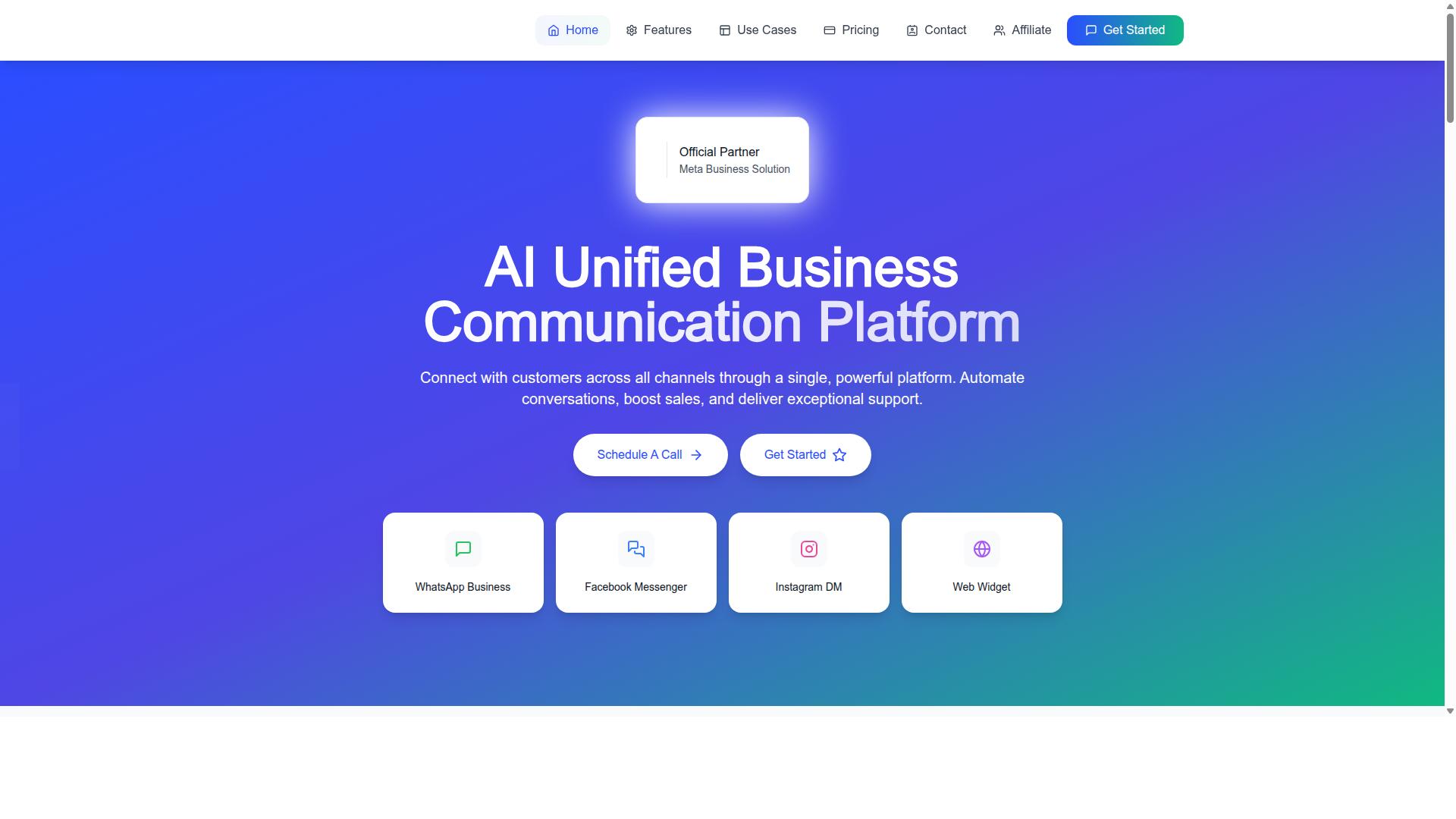
Com.bot is an AI Unified Business Communication Platform that connects WhatsApp Business, Facebook Messenger, Instagram DM, and Web Widget into a single platform, supporting bulk messaging for ecommerce. Instead of juggling four apps, teams work from one place.
The platform is an Official Meta Business Partner with direct WhatsApp Business API integration, a detail that matters for stores sending high volumes. It serves 23,000+ active customers and processes 25M+ messages daily, according to the company.
For ecommerce stores, that combination supports the full lifecycle of a messaging program: promotional campaigns, transactional messages like order confirmations and shipping updates, and the back-and-forth that follows. The next two sections break down the specific features that make this work and what the plans cost.
Unified Inbox, Bot Builder, and Native WhatsApp Payments
Com.bot's unified inbox, drag-and-drop bot builder, and native WhatsApp payments enable ecommerce stores to automate and scale bulk messaging across channels. Each piece handles a different stage of the customer journey.
The Unified Team Inbox brings WhatsApp, Instagram, Messenger, and web chat into one window. Teams can assign conversations to specific members and use canned responses for common questions. When a promotional campaign triggers a wave of replies, nothing sits unanswered in a channel nobody checked.
The Visual Bot Builder lets stores create chatbots through a drag-and-drop interface, no coding required. Common uses include abandoned cart sequences, order updates, and FAQ handling. For bulk messaging, this means segmented broadcasts can go out and routine replies get handled automatically.
Native WhatsApp Payments lets customers pay directly inside WhatsApp. That removes the redirect to a browser checkout, which is often where cart abandonment happens. A customer who receives a back-in-stock alert or price drop notice can act on it immediately.
Because Com.bot supports the WhatsApp Business API, stores can send template messages at high volume while staying within Meta's rules. Opt-in consent remains essential here, the same as with SMS marketing or email blasts, and it protects sender reputation over the long run.
Together these features cover the full loop: send a segmented broadcast, capture the reply, resolve it, and collect payment without leaving the conversation.
Pricing and Plans for Growing Stores
Com.bot offers transparent pricing with three tiers, Silver, Gold, and Platinum, plus affordable add-ons, making it scalable for ecommerce stores of any size. All prices are in USD, and WhatsApp messaging is billed at actual Meta rates with no markup.
| Plan | Price | Best For |
|---|---|---|
| Silver | $149 per quarter | Stores starting with bulk messaging |
| Gold (Recommended) | $349 per quarter | Growing stores scaling campaigns |
| Platinum V1 | $2500 per quarter | High-volume or multi-brand operations |
Gold is the recommended tier for growing stores because it balances features and cost. It suits a store running regular promotional campaigns, cart abandonment sequences, and support at meaningful volume.
Add-ons are $10 per month each for an additional team member, social channel, external actions (per 5000), bot triggers (per 25000), or ecom store. That structure lets a store expand one dimension at a time rather than jumping tiers.
A practical path: start on Silver to test bulk messaging and measure click-through rate, conversion rate, and unsubscribe rate. Upgrade to Gold once volume and team size justify it. Dedicated support is also available at $49 per hour for WABA, CRM, and Inbox help, or $99 per hour for ecommerce, bots, and automations.
Measuring ROI and Scaling What Works
To maximize ROI from bulk messaging, track key metrics, run A/B tests, and double down on the campaigns and channels that deliver the highest returns. Without this discipline, ecommerce stores end up scaling guesswork instead of results.
The core formula is simple: (Revenue from campaign - Cost) / Cost. If a promotional campaign generates $4,000 in attributed revenue and costs $500 to run, the ROI is 7x, or a 700% return. Calculate this per channel, per segment, and per campaign type so you know exactly where the money comes from.
Costs should include more than message fees. Factor in platform subscription, creative production, list management, and staff time. A channel that looks cheap per message can turn expensive once these are added.
Benchmarks help set expectations, but treat them as directional. Industry reporting suggests SMS marketing returns roughly $25 for every $1 spent, while WhatsApp campaigns can see higher conversion than email. Your own numbers matter more than any published average.
Track these metrics for every send:
- Open rate and click-through rate to gauge message relevance
- Conversion rate to connect engagement to purchases
- Unsubscribe rate and bounce rate to catch list health problems early
- Revenue per message to compare channels on equal footing
A/B testing turns those metrics into decisions. Test one variable at a time so results stay readable. Common tests include subject lines and opening copy, send times across the day, and offer structure such as percentage off versus free shipping.
Run each test on a sample large enough to be meaningful, then apply the winner to the full list. Keep a log of what won and why, because patterns emerge fast. A subject line style that works for cart abandonment may fail for win-back campaigns.
Segmentation is where scaling gets efficient. Identify the segments with the highest conversion rate and revenue per message, then increase send frequency for those groups. Segments worth watching include recent buyers, high spenders, and customers who engage with every campaign.
Scale carefully. Raising frequency too quickly drives up unsubscribe rates and erodes sender reputation. Add one extra send per month, watch the numbers, and expand again only if engagement holds.
Com.bot provides analytics to track message performance and customer lifetime value, so you can see which segments and channels justify more volume. Pair that with opt-in consent practices and compliance with TCPA, GDPR, and CAN-SPAM rules as your list grows.
To start scaling with Com.bot, reach the team through the details below.
- Head Office: 501, Trinity Orion, Vesu Main Road, Surat - 395010, IN
- Phone/WhatsApp: +91 080 6987 1810
- Email: [email protected]
- Business Hours: Monday - Friday: 9:00 AM - 6:00 PM IST
- Social: WhatsApp Support available
Recommended Resources: