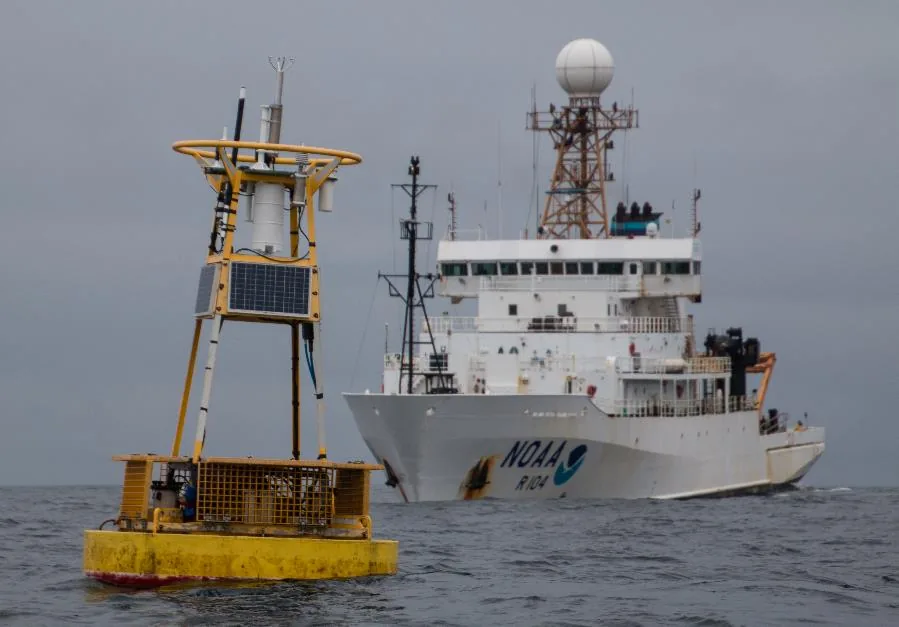
NOAA researchers have begun a new coastwide survey designed to connect changing ocean chemistry with the marine organisms living in those conditions. The agency announced on July 20 that the seventh West Coast Ocean Acidification mission had departed San Diego aboard the research vessel Sikuliaq for an intensive sampling campaign toward Washington.
The expedition combines measurements that are often collected separately. Scientists are recording ocean carbon chemistry, temperature and other physical conditions while sampling phytoplankton, zooplankton and environmental DNA. Material shed by organisms into surrounding water can help identify which forms of marine life are present without relying only on visual surveys or net catches.
Ocean acidification occurs as seawater absorbs carbon dioxide and its chemistry changes. One important consequence is a reduction in the availability of carbonate minerals used by shell-forming organisms. The survey will measure calcium-carbonate saturation, a condition relevant to species including oysters, clams and Dungeness crabs.
NOAA said the campaign offered a chance to sample conditions developing toward a possible strong El Niño. That was presented as a research opportunity rather than a completed finding. El Niño can change West Coast water temperatures, precipitation and upwelling, with effects that move through plankton communities, food webs and fisheries.
The measurements will also be used to evaluate forecasting systems such as J-SCOPE, which produces six-to-nine-month estimates for the California Current ecosystem. Ship samples can calibrate and check readings from buoys, autonomous gliders and other sensors that operate between major expeditions.
No biological impact result should be inferred before the samples are processed and analyzed. The immediate development is the collection of a new benchmark data set. Comparing it with earlier surveys should help researchers separate long-term chemical change from seasonal variability and episodic events.